
昨夜星辰
克里姆林宫:即使中方参加,瑞士举行乌克兰和平峰会也不会有效!_我的网站

一 |
俄罗斯总统普京5月16日开始访华两天,他在当天下午举行的新闻发布会上表示,双方讨论了贸易和投资、深化能源合作以及棘手的乌克兰问题。他认为讨论是“热情和友好的”,这表明了两国关系的重要性。 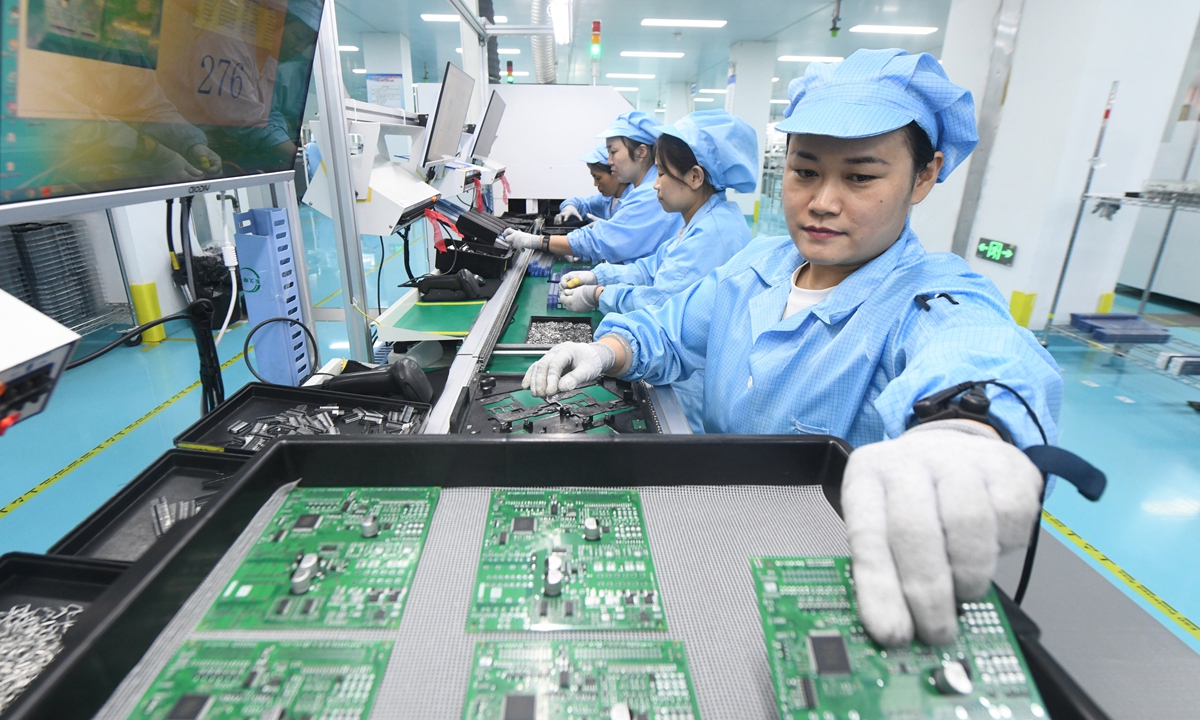
China's exports of integrated circuits (ICs) reached $216.02 billion in the first seven months of 2026, up 99.5 percent year-on-year, according to data released by the General Administration of Customs (GAC) on Friday.
Chinese experts said that rising global artificial intelligence (AI) demand is a factor, but the main drivers of the leap in chip exports are the country's technological breakthroughs and upgraded industrial chain.
The robust growth in IC exports also came as China's overall foreign trade saw stable expansion. According to data released by the GAC, the sound upward trend in China's foreign trade continued in July, with growth of 19.2 percent year-on-year to reach 4.66 trillion yuan ($686.26 billion), remaining above 4 trillion yuan for the fifth consecutive month.
In the first seven months of the year, total foreign trade in goods amounted to 30.13 trillion yuan, up 17.3 percent year-on-year, the data showed.
"Since the start of this year, China's economy has forged ahead against headwinds and moved toward innovation-driven, higher-quality development, providing strong underpinning for the growth of foreign trade," said Lü Daliang, an official with the GAC.
According to the GAC, China's exports of electromechanical products reached 11.12 trillion yuan between January and July, up 21.2 percent year-on-year. They accounted for 63.8 percent of the country's total exports, up 3.8 percentage points on a yearly basis.
There was notable progress in green and low-carbon products, with exports of electric vehicles (EVs) and lithium batteries rising by 71.2 percent and 35.8 percent, respectively, while exports of 3D printers soared by 110 percent, with industrial robots jumping 13.2 percent and ships 32.7 percent.
"The surge in China's chip exports reflects breakthroughs in multiple aspects," Fu Liang, a Beijing-based tech analyst, told the Global Times on Friday. Fu pointed to a rise in mature-node capacity, industrial and supply chain resilience, and scale production advantages of Chinese companies.
As demand for chips in automotive electronics, industrial control systems, and household appliances keeps rising, China-made mature-process chips - backed by reliable supply capability and strong cost-performance - have become an indispensable link in the global supply chain, Fu said.
Meanwhile, there has been an upgrade in China's chipmaking industry, such as the new chip design approach at Huawei based on the company's Tau Scaling Law, and the international competitiveness of China-made chips is expected to increase, supporting further growth in exports, the expert noted.
China recently issued a revised regulation on protection of IC layout-designs. Scheduled to take effect on October 15 this year, the regulation aims to strengthen the protection and application of layout-designs, and improve registration and management systems by elevating proven practices into regulations, while also aligning with relevant laws and international treaties.
These institutional upgrades are unfolding alongside broader efforts to expand domestic demand and open the Chinese market wider to the world. China has also accelerated imports in the first seven months of this year to promote a more balanced development of foreign trade. China has remained the world's second-largest import market for 17 consecutive years. In the first seven months of 2026, China's import growth outpaced export growth by 8 percentage points, according to the GAC.
In addition, China's imports and exports with over 180 countries and regions registered growth over the period. Specifically, the country's trade with ASEAN, the EU, Latin America, and Africa rose by 20 percent, 9.5 percent, 15.4 percent, and 18.9 percent year-on-year, respectively. Trade with the US, however, fell by 1.6 percent, with the decline narrowing by 2 percentage points compared with the first half of the year, according to the GAC.
Amid a complex external environment, China has leveraged its complete industrial chain to accelerate trade structure upgrading, driving brisk growth in both imports and exports, Wen Bin, chief economist of China Minsheng Bank, told the Global Times.
Although China's foreign trade sector still faces pressure in the second half of the year, Wen said the same fundamentals are still supporting China's export growth: the competitiveness of China's "new new three" products, the ongoing AI investment cycle, plus a raft of domestic risk-mitigation policies covering forex, fiscal and customs.
"China's export sector is projected to hold onto double-digit growth in the second half of the year," he said.
。他说,两国都在努力建设一个“多极世界”,双方在处理全球或地区问题上的许多做法都是相似的。
China's exports of integrated circuits (ICs) reached $216.02 billion in the first seven months of 2026, up 99.5 percent year-on-year, according to data released by the General Administration of Customs (GAC) on Friday.
Chinese experts said that rising global artificial intelligence (AI) demand is a factor, but the main drivers of the leap in chip exports are the country's technological breakthroughs and upgraded industrial chain.
The robust growth in IC exports also came as China's overall foreign trade saw stable expansion. According to data released by the GAC, the sound upward trend in China's foreign trade continued in July, with growth of 19.2 percent year-on-year to reach 4.66 trillion yuan ($686.26 billion), remaining above 4 trillion yuan for the fifth consecutive month.
In the first seven months of the year, total foreign trade in goods amounted to 30.13 trillion yuan, up 17.3 percent year-on-year, the data showed.
"Since the start of this year, China's economy has forged ahead against headwinds and moved toward innovation-driven, higher-quality development, providing strong underpinning for the growth of foreign trade," said Lü Daliang, an official with the GAC.
According to the GAC, China's exports of electromechanical products reached 11.12 trillion yuan between January and July, up 21.2 percent year-on-year. They accounted for 63.8 percent of the country's total exports, up 3.8 percentage points on a yearly basis.
There was notable progress in green and low-carbon products, with exports of electric vehicles (EVs) and lithium batteries rising by 71.2 percent and 35.8 percent, respectively, while exports of 3D printers soared by 110 percent, with industrial robots jumping 13.2 percent and ships 32.7 percent.
"The surge in China's chip exports reflects breakthroughs in multiple aspects," Fu Liang, a Beijing-based tech analyst, told the Global Times on Friday. Fu pointed to a rise in mature-node capacity, industrial and supply chain resilience, and scale production advantages of Chinese companies.
As demand for chips in automotive electronics, industrial control systems, and household appliances keeps rising, China-made mature-process chips - backed by reliable supply capability and strong cost-performance - have become an indispensable link in the global supply chain, Fu said.
Meanwhile, there has been an upgrade in China's chipmaking industry, such as the new chip design approach at Huawei based on the company's Tau Scaling Law, and the international competitiveness of China-made chips is expected to increase, supporting further growth in exports, the expert noted.
China recently issued a revised regulation on protection of IC layout-designs. Scheduled to take effect on October 15 this year, the regulation aims to strengthen the protection and application of layout-designs, and improve registration and management systems by elevating proven practices into regulations, while also aligning with relevant laws and international treaties.
These institutional upgrades are unfolding alongside broader efforts to expand domestic demand and open the Chinese market wider to the world. China has also accelerated imports in the first seven months of this year to promote a more balanced development of foreign trade. China has remained the world's second-largest import market for 17 consecutive years. In the first seven months of 2026, China's import growth outpaced export growth by 8 percentage points, according to the GAC.
In addition, China's imports and exports with over 180 countries and regions registered growth over the period. Specifically, the country's trade with ASEAN, the EU, Latin America, and Africa rose by 20 percent, 9.5 percent, 15.4 percent, and 18.9 percent year-on-year, respectively. Trade with the US, however, fell by 1.6 percent, with the decline narrowing by 2 percentage points compared with the first half of the year, according to the GAC.
Amid a complex external environment, China has leveraged its complete industrial chain to accelerate trade structure upgrading, driving brisk growth in both imports and exports, Wen Bin, chief economist of China Minsheng Bank, told the Global Times.
Although China's foreign trade sector still faces pressure in the second half of the year, Wen said the same fundamentals are still supporting China's export growth: the competitiveness of China's "new new three" products, the ongoing AI investment cycle, plus a raft of domestic risk-mitigation policies covering forex, fiscal and customs.
"China's export sector is projected to hold onto double-digit growth in the second half of the year," he said.
。他说,两国都在努力建设一个“多极世界”,双方在处理全球或地区问题上的许多做法都是相似的。
普京感谢中方为试图解决乌克兰危机所做的努力,表示他将通报战场形势;普京说,俄罗斯军队在乌克兰东北部的新一轮攻势中每天都在取得进展,俄军正在乌克兰战场上向四面八方推进。

二 |
普京表示,他再次当选俄罗斯第五任总统后的第一次出访,是前往俄罗斯在全球最重要的盟友中国,这是“合乎逻辑的”。他感谢中方给予的热情欢迎,承认两国领导人签署了关于深化两国“新时期战略合作伙伴关系”的联合声明,以及双方签署的另外10份合作文件。

三 |
据俄新社报道,俄罗斯联邦安全委员会新任秘书、前国防部长绍伊古表示,俄罗斯军队正在乌克兰向各个方向推进。“正如普京总统所说,这是显而易见的,俄军的攻势正在各个方向展开,进展相当顺利。”
绍伊古星期四作为俄罗斯代表团的一员接受了克里姆林宫随行记者的采访。俄罗斯代表团成员还包括外交部长拉夫罗夫、新任国防部长别洛索夫、财政部长安东·西卢安诺夫和中央银行行长埃尔维拉·纳比乌利纳。
根据俄罗斯总统普京的上周任命,绍伊古被别洛索夫取代,这被认为是遭到降级。

四 | 但绍伊古星期四说,他在新职位上的主要工作仍然是对乌克兰的“特别军事行动”。
俄罗斯国防部周三通报称,俄军又控制了乌克兰哈尔科夫地区两个新的定居点(村庄),并已完全控制了扎波罗热的Robotyne定居点。
乌克兰方面承认,随着俄罗斯新一轮攻势的展开,俄军在乌克兰东北部哈尔科夫地区占领的定居点日益扩大。但它驳斥了俄罗斯有关控制Robotyne的说法。
关于即将在瑞士举行的乌克兰和平峰会,克里姆林宫重申了其立场,即如果没有俄罗斯的参与,定于6月在瑞士举行的和平峰会是徒劳的,并表示即使中方真的参加了这次峰会,也不会使其更有效。
克里姆林宫新闻秘书佩斯科夫星期四说:“从我们的角度来看,这次会议本身不太可能被视为寻求解决乌克兰问题的某种认真尝试。

五 | ”
瑞士总统阿姆赫德星期三说,来自50多个国家的代表团将参加6月15日至16日举行的乌克兰和平峰会。

六 | 瑞士希望说服更多来自“全球南方”的国家以及中方参加峰会。
据报道,中方似乎对这次峰会意向不明,并强调举行乌克兰和平峰会应该包括俄罗斯。中方此前已经提出了解决乌克兰问题的12点和平计划,但西方反应平淡。
报道称,尽管莫斯科没有被邀请参加最近的瑞士峰会,而且俄方多次表示无论如何都不会参加,但瑞士领导人一再表示,俄罗斯必须参与和平进程。

七 |
当被问及北京参加这次会议的可能性时,佩斯科夫说,从我们的角度来看,中方的平衡参与只会让任何一次会议变得高尚,但不会增加会议本身的有效性。
延伸阅读:俄乌血战哈尔科夫,美国务卿基辅督战:打退俄罗斯的进攻!
延伸阅读:俄罗斯国防部声称哈尔科夫之战大捷:3天拿下乌克兰9个村庄

八 |
Current article:http://sm25.diapoqiechuangpenghua.sbs/list_9a80/a2d.html
Published on:15:53:12